South Lake Tahoe ConcreteSouth Lake Tahoe Concrete

Garage floor concrete in South Lake Tahoe CA - a slab that holds up through winter

Cracked, chipped or sinking garage floor? We dig out, pack a solid base and pour a new slab that carries your cars through winter.

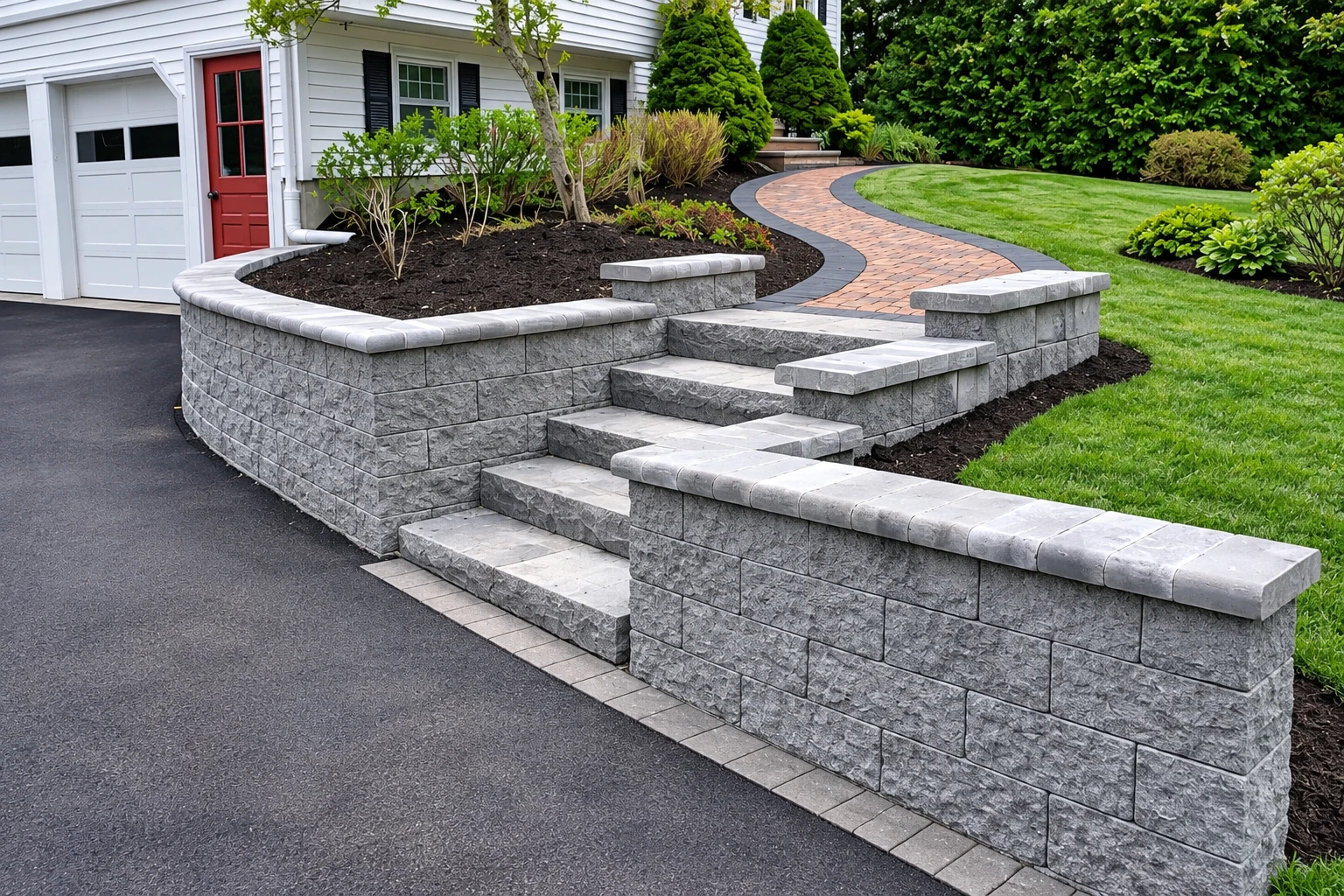
Gray block retaining walls with broad steps frame a raised garden beside a curved brick walkway.

Garage floor concrete in South Lake Tahoe means forming, pouring and finishing a flat slab that becomes your garage's new floor, built on a packed base so it stays flat under your cars through freeze and thaw.

What does a new garage floor involve in South Lake Tahoe?

Most calls start with an old floor that's cracked, chipping or dropped at one corner, or a new garage that needs a floor. Either way, what's under the slab decides how it holds up. If the old base was raked level instead of dug out and packed, it settled with the dirt and the concrete cracked with it. Pouring on that same ground just repeats the problem.

The price moves with the size of the floor, whether an old slab has to be broken out and hauled off, how much base work the ground needs, and whether you'll heat or coat the garage. The schedule turns on the weather and on thawed ground more than anything we control. Your written estimate spells out what's included and what isn't, so you know what you're paying for.

What keeps a garage slab from cracking

Everyone asks whether the new floor will crack like the old one. These are the parts of the job that decide it, and most of them are hidden once the concrete is down.

A dug-out, packed base

The subgrade is the ground the slab sits on, and it has to be firm and even everywhere. We dig out soft soil, pack the base and compact any old utility trenches, because a soft spot under one tire turns into a crack later, no matter how good the top looks.

Control joints cut on time

Concrete shrinks as it dries, and it's going to crack somewhere. Control joints are shallow cuts that give it a straight line to crack along where you won't notice. We cut them as soon as the slab can take the saw, because joints cut late or skipped leave cracks wherever they like.

Pouring in the right conditions

A slab poured into midday heat dries too fast on top and can turn weak and dusty later, and cold brings its own trouble. I'd rather move the pour to a better day than finish in bad conditions and leave you with a surface that wears out early.

What happens when you call about a garage floor

Here's how a garage floor goes from your first call to the day you park on it, and who handles each part along the way.

  1. 1

    Call and tell me about it

    You call and I answer, or I call you back. Tell me the garage size, what parks in it and whether you plan to heat or coat it, and we'll set a time for me to come out.

  2. 2

    Walk the garage, get it in writing

    I look at the old floor and the ground around it, ask what the slab has to carry and check what's nearby. You get a written estimate showing what's included and what isn't.

  3. 3

    Permits, line marking, then the pour

    Once you say go, we sort out the permit side and get buried lines marked before anyone digs. We pick a pour date the weather allows, then form, pour and finish the slab.

  4. 4

    Walk the floor and get care notes

    When it's done, we walk the floor with you and leave plain care instructions, including when it's ready for your car and what to watch for in its first winter.

Request an estimate

How we plan and pour garage floor concrete

The first thing I ask is whether you'll heat the garage, coat the floor or connect it to the house. Each one changes what goes under the slab, and none of it can be added once the concrete is down. A floor that only holds a truck and a snowblower gets built one way. A heated shop with a coated floor gets built another.

Then the ground. We check that it's thawed before anything is poured, because frozen soil under fresh concrete settles when it thaws. After that the work is plain and slow. We break out the old floor if there is one, dig out the soft base, pack it, set the forms, pour, finish and cut the joints.

Here's the trade-off I'll name up front. The base is the part nobody sees on day one, so it's usually the first place a budget gets cut. I'd drop a finish upgrade before I'd cut base work, because a nice surface on a soft base cracks just the same and costs more to fix later.

If the garage opens onto an entry or walkway you want dressed up with color or texture, that's decorative concrete, and we can plan it alongside the floor. If the garage is cut into a slope and the ground beside it needs holding back, concrete retaining walls usually go in before the slab does.

Bare broom finish or coated

A broom finish is a light brushed texture that gives tires and boots grip on wet concrete and needs little care. If you'd rather coat the floor later, tell us now so the slab gets planned for it.

Pour now or wait

If the ground is frozen or the forecast turns cold, waiting a week or until spring costs you time, not a cracked floor. I'll tell you straight which way the weather points.

Get a written estimate for your new garage floor

Send the form and I'll get back to you within one business day to set a time to come out. The estimate is free, done at your property and written out, and there's no obligation to go ahead.

(530) 307-5972

contact@southlaketahoeconcrete.com

Garage floors and the ground work around them in South Lake Tahoe

Timing here isn't only about the weather. Digging and filling for a new base falls under TRPA, the Tahoe Regional Planning Agency, which treats small excavation or fill work as qualified exempt only when the job meets several limits. One of those limits is that the work happens during grading season, May 1 to October 15. If your dates fall outside it, we ask the City before planning around them.

The state lets someone without a license take minor work under $1,000, but only when the job needs no permit and that person has no employees on it. A garage floor poured by a crew doesn't fit that exception, so ask anyone you're considering whether they hold a license before they start digging.

We're based in South Lake Tahoe and work in the cities around it too. Garages here take snowmelt off tires half the year and sit on ground that freezes and thaws, so the cracked floors we're called to usually failed from below, not on top. Our South Lake Tahoe service area page covers the rest of the work we do here.

Why South Lake Tahoe homeowners call us for garage floors

I came to concrete later than most and learned it on a finishing crew before starting South Lake Tahoe Concrete in 2021. I still answer the phone, I come out to look at the job and write the estimate myself, and I'm on site for the pour with a small crew of experienced form setters and finishers.

The state licenses concrete contractors for this kind of flat work, and we're licensed and insured. Our work is backed by our satisfaction guarantee. If you're ready to talk about your garage floor, call (530) 307-5972 or send the details through our form, and I'll set a time to come look.

Decorative concrete

Want the entry, walkway or patio beside your garage to look finished? Colored or textured concrete gives the surfaces you walk past daily more than plain gray.

Concrete retaining walls

Garages cut into a hillside often need a wall that holds the soil back, so the ground beside the slab and driveway stays where it belongs.

Where we pour garage floors

We're based in South Lake Tahoe, CA, and pour garage floors there and in the cities around it. If you're nearby and not sure we cover your street, call and ask.

Garage floor questions from South Lake Tahoe homeowners

Can a garage floor be poured in winter in South Lake Tahoe?

Sometimes, if the ground is thawed and the concrete is protected. Concrete work counts as cold weather when the air drops, or is expected to drop, below 40°F while fresh concrete still needs shelter, and properly mixed, placed and protected concrete still gets strong. Frozen ground is the deal-breaker, since it settles as it thaws and breaks the slab from below.

Who issues building permits in South Lake Tahoe?

The City of South Lake Tahoe Building Division issues building permits and inspects construction work against the California Building Code, TRPA rules and City ordinances. Ask the division whether your garage floor needs one. If it does, we work out which office it goes through and help you file before work starts, and when something's unclear, we ask the City.

Can I coat or heat my new garage floor later?

Yes, but plan it before the pour. If the garage will be heated, coated or connected to living space, moisture control under the slab may matter, and it can't be slipped in afterward. Before an epoxy or polyaspartic coating goes on, the floor's moisture and texture get checked, and a young floor waits even when it looks dry.

How much does a new garage floor cost in South Lake Tahoe?

Across California, an installed 4-inch concrete slab usually runs about $9 to $18 per square foot, labor and materials included. That's a statewide range, not our price. Your price here depends on the floor's size, the base work and whether an old floor has to come out, and our written estimate at your property lays all of that out.

Will road salt damage my new concrete garage floor?

It can, mostly when the concrete is young or wasn't finished and cured well. Deicing salt raises the risk of scaling, where the top layer flakes off. Concrete that soaks up water can also be damaged by repeated freezing and thawing, and concrete guidance treats air entrainment, tiny evenly spread air bubbles in the mix, as a key defense where conditions call for it.

How do I get my garage ready for a new concrete floor?

Empty the garage completely, including cars, shelves and anything stored on the floor, because we need the whole space to break out, dig and form. Tell us about any floor drain or buried lines you know of, and keep the driveway clear on pour day so the truck can reach the garage.

How long before I can park on a new garage floor?

Longer than you'll want, and cold weather stretches it. Curing is the wait while concrete gains strength, so you walk on it well before you drive on it. We'll give you the timing at the walk-through based on that week's weather, because a car parked too early can mark or crack a young slab.

Send your garage size and plans

Call (530) 307-5972 or use the form with your garage size, any plans to heat or coat the floor and when you'd like it done, so the first visit covers everything.

(530) 307-5972Request an estimate