South Lake Tahoe ConcreteSouth Lake Tahoe Concrete

Foundation installation in South Lake Tahoe CA - built for your soil and frost

Got plans for a home or addition on a cold Tahoe lot? We set the foundation from your soil report, with frost and winter pours planned first.

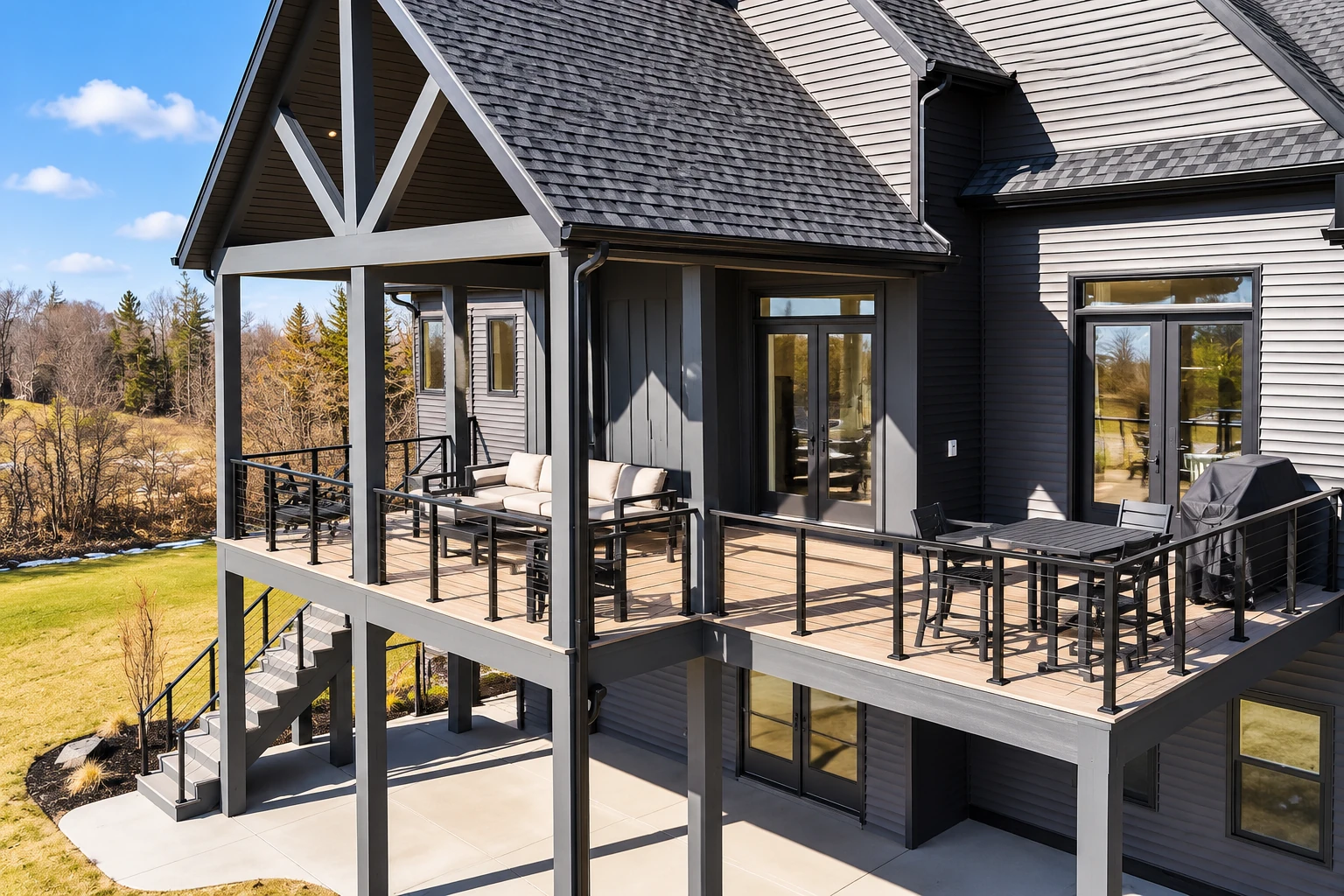
A modern house has a raised wood deck with black railings and seating above a broad concrete patio.

Foundation installation in South Lake Tahoe is the concrete your house, addition or building sits on, laid out from a soil report and a design so it holds through freezing winters and stays put on the ground under it.

What does a new foundation in South Lake Tahoe involve?

Most calls start with plans in hand and a lot that's cleared or about to be. Before anyone digs, you need to know what the soil is, how the lot drains and how the edge of the foundation will deal with frost. Those answers decide the depth, the steel and the insulation, so I want them settled on paper before we price the pour.

The price moves with the size and depth of the foundation, how much digging and base work the soil calls for, the slope of the lot and whether you go with a deeper edge or insulation. The schedule turns on the permit, the design and the weather, because we won't pour into a freeze. If your job needs a City permit, we help you file it before work starts, and your written estimate shows what's included and what isn't.

What keeps a foundation flat and dry

Most of what decides how a foundation holds up is buried the day we pour. These are the three things I look at hardest, and the shortcuts I won't take on them.

The ground underneath

The subgrade, the soil the concrete sits on, has to be dug down to firm ground and packed, not raked level. Loose dirt settles over the first few seasons and the concrete settles with it. That shows up later as cracks and doors that stick, and by then it costs far more to fix than the digging did.

Where the water goes

I check where the water runs before we set a single form, because water sitting against a foundation soaks the ground under it and can freeze there in winter. The finished grade should fall away from the building. If the lot pushes water toward it, we deal with that first, not after you see it pooling.

Steel inside the concrete

Rebar, the steel bars set inside the forms, holds the concrete together when the ground pushes or pulls on it. Concrete is strong when it's squeezed and weak when it's stretched, so the steel goes where the design puts it, tied and held up off the dirt so it ends up inside the pour.

What happens after you call about a new foundation?

Here's how a foundation job runs with us, from the first call to the walk-through at the end, and what you'll have in hand along the way.

  1. 1

    Call or send the form

    Call (530) 307-5972 or send the form and tell me what you're building and where. I'll set a time to come out to the lot, so we're talking about your ground and not a guess.

  2. 2

    Walk the lot, get it in writing

    I look at the site, ask what the foundation has to carry and check what's around it, like the slope, the drainage and the access. Then you get a written estimate that spells out what's included and what isn't.

  3. 3

    Clear the permit, then pour

    Once you say go, we sort out the permit side and get buried lines marked before anyone digs. We pick a pour date the weather allows, then dig, form, pour and finish.

  4. 4

    Walk the finished foundation

    When the forms come off, I walk the foundation with you so you can see what you're getting. You get plain care instructions, including how to keep it protected while it cures before the next trade starts.

Request an estimate

How we handle foundation installation

We work from the soil report and the design, not a guess. The design turns what the soil report found into a depth, a width and the steel, and any concrete footings for walls or posts come out of the same plan. On a shop or office build, the concrete parking lot can be planned alongside it so water off the paving drains away from the foundation.

Here's the trade-off I'll name up front. When a budget gets tight, the first thing people want to cut is the base, because nobody sees it once the concrete's down. I'd cut almost anything else first, because a foundation with a clean top on poorly packed ground will move, and every wall built on it moves too.

Curing is the stretch after the pour when concrete gains its strength, and it needs warmth and moisture to do it. If your pour lands in cold weather, freeze protection is planned before the truck is booked, not scrambled for that morning. I'd rather tell you to wait for a better week than pour into bad conditions and have you pay for it later.

Deeper foundation edge

The edge goes down below where the ground freezes, so frost heave, the ground swelling as it freezes, can't get under it and lift it. It means more digging and more concrete.

Insulated perimeter

Rigid insulation goes around the outside edge to keep the ground under it from freezing, so the foundation can sit shallower. It saves digging, and it suits some lots better than others, which we'll talk through plainly.

Get a written estimate for your foundation

Send the form and I'll get back to you within one business day to set a time to come out and look at the lot. The estimate is free, it's done at your property and there's no obligation to go ahead.

(530) 307-5972

contact@southlaketahoeconcrete.com

Foundation installation and permits in South Lake Tahoe

A new foundation inside the city goes through the City of South Lake Tahoe Building Division, which issues building permits for all construction in the city. Its plan check and inspections hold your plans to the California Building Code, TRPA regulations and the City's own ordinances. We work out which office your job goes through and help you file before work starts, and when something's unclear, we ask the City instead of guessing.

El Dorado County also runs a building office in South Lake Tahoe, which takes calls at (530) 573-3330 and email at tahoebuild@edcgov.us. Confirm which of the two offices handles your address before anything is filed, because that decides where the permit goes.

We're based in South Lake Tahoe and work in the cities around it too. Most foundation calls here come with the same two questions, how the edge will deal with frost and when we can pour, because the winters are cold. Our South Lake Tahoe page covers the other work we do in the city.

Why South Lake Tahoe owners call us for foundation work

I answer the phone myself, and I'm the one who comes out to look at the lot and write the estimate. A small crew of experienced form setters and finishers does the work, and I'm on site for the pour, because that's the day mistakes get locked into the concrete.

We've been in business since 2021, five years now, and I learned the trade on a finishing crew before I started this company. We're licensed and insured. Every job is backed by our satisfaction guarantee, and we're known for doing the dull prep work properly and giving straight answers on cost and timing.

If you're planning a home, an addition or a building and want to know what the foundation will take, call (530) 307-5972 or use the form on this page. I'll come out, look at the lot with you and tell you what I'd do and why.
Concrete footings

Decks, posts, walls or a garage next to the house may need their own footings, sized to carry the weight down to firm ground.

Concrete parking lot building

Putting up a shop or office means planning where cars park, and paving graded to shed water keeps runoff away from the new building.

Where we build foundations

South Lake Tahoe is home base and has its own page here, but it isn't the edge of our map. If you're in a nearby city, call and ask whether we can take your job.

Foundation questions from South Lake Tahoe owners

Do I need a permit to pour a new foundation in South Lake Tahoe?

Yes, plan on one, as the permit section above explains. Every City building permit application, inspection request and payment goes through its eTRAKiT system, and whoever files has to register an account there first. We help you get it filed before work starts.

Does the soil need to be tested before a foundation is built?

Yes. One foundation guide says design always begins with a soil investigation, with borings or test pits dug and samples tested in a lab. Slab foundations do best on well-drained sites with even soil, and they're a poorer fit on expansive clay, which can shift parts of the slab unevenly and damage the structure.

How does a foundation handle frost in South Lake Tahoe?

In cold climates, the edge of a slab has to go below the depth where the ground freezes or be protected with insulation around the outside. An older national builder's guide describes frost protected shallow foundations, which use that insulation so the foundation can sit shallower, and says they suit slab homes on flatter lots best. Your design settles what applies to your lot.

Can you pour a foundation in winter in South Lake Tahoe?

Yes, with protection. Fresh concrete should be kept from freezing until it reaches a minimum strength, about two days after the pour for most concrete held at 50°F, and concrete that freezes early can lose up to 50% of its final strength. Some weeks the honest answer is to wait.

How much does a new foundation cost in South Lake Tahoe?

I can't give you a fair number without seeing the lot and the plans, because two foundations the same size can cost very different amounts. Soft or uneven soil, a steep lot and a cold-weather pour push it up the most. Your written estimate breaks it down so you can see what you're paying for.

Call about your foundation plans

Have the property address, how steep the lot is, any soil report and your plans ready when you call (530) 307-5972, send the form or email contact@southlaketahoeconcrete.com, so the first visit gets straight to real answers.

(530) 307-5972Request an estimate