South Lake Tahoe ConcreteSouth Lake Tahoe Concrete

Decorative Concrete in South Lake Tahoe CA - a finish that holds up to winter

A plain gray patio that chips every winter? We pour stamped, colored concrete on a solid base and seal it for snow and sand.

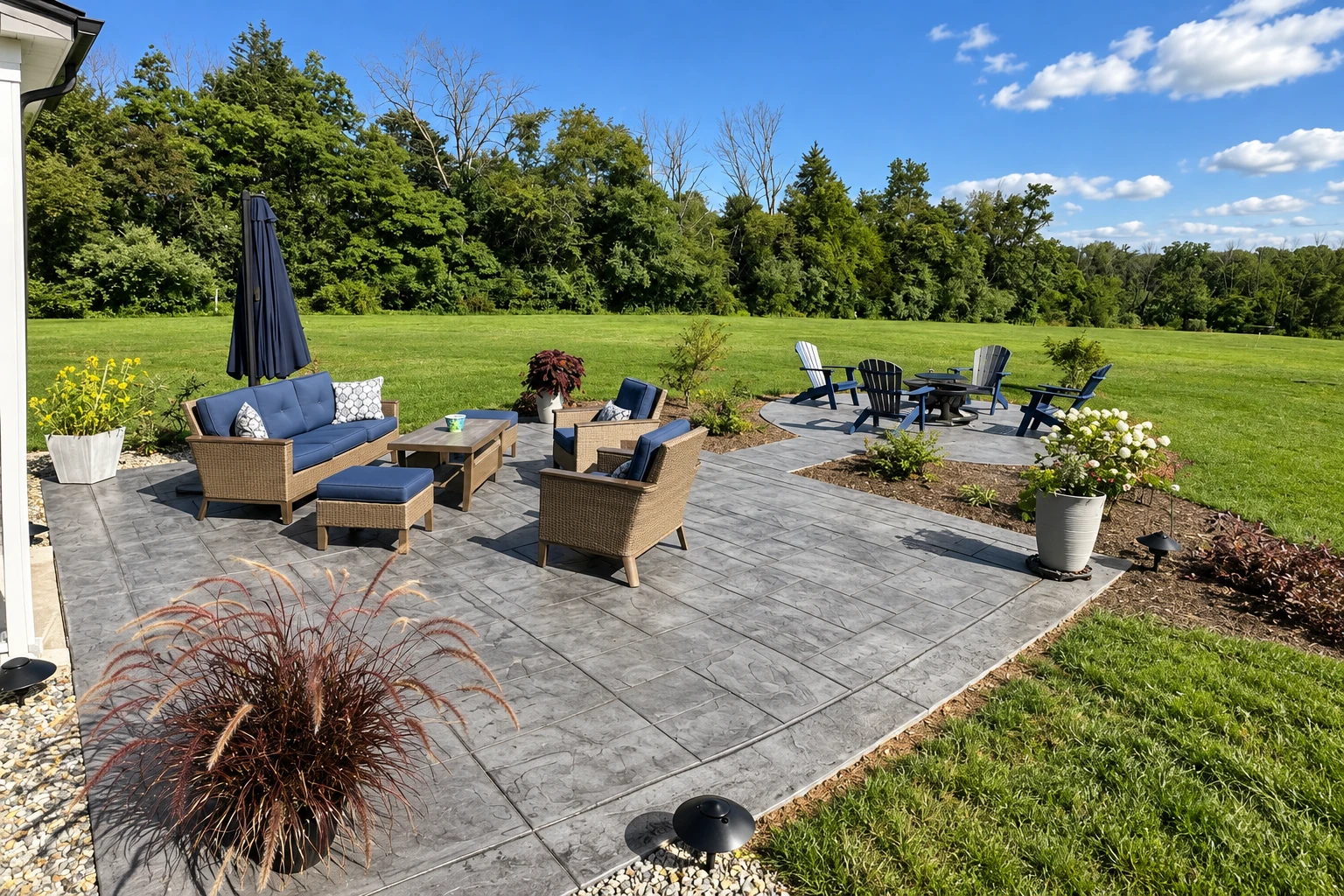
Stamped concrete patio with gray rectangular patterns, outdoor seating, and a lawn setting.

Decorative concrete in South Lake Tahoe is a patio, walk or other flat slab that we form, pour and finish with a stamped pattern, color or texture, then seal so water, deicer and stains stay out of the surface.

What goes into decorative concrete in South Lake Tahoe?

Most calls start the same way. You've got a gray slab that's chipping or flaking after a few winters, or a bare spot where you want a patio that looks like stone or brick. The look is what you're paying for, but it only lasts if what's under it is right, and that's where most of our time goes.

Price moves with the size of the area, the pattern and color you pick, how much old concrete has to come out and how much digging and base work the ground needs. The schedule turns mostly on the weather, because decorative work has to cure in good conditions, and on whether a permit is needed. Your written estimate lays out what's included and what isn't.

What keeps a decorative slab from cracking and sinking

The pattern gets all the attention, but a few things you won't see once it's poured decide whether it cracks, sinks or holds water. Here's what we look at before the pour.

Where the water runs

Before we set forms, we check where water comes from and where it'll go, because a slab that falls toward the house sends rain and snowmelt against your foundation. Water pooling on a patio also freezes into ice and works into the surface. We set the slope so water runs off and away.

Joints placed in the pattern

Control joints are cuts that give the concrete a planned place to crack as it shrinks, so the crack hides in a straight line. Cut late or skipped, the slab picks its own spot, usually right across your pattern. We line the joints up with the stamp lines so they blend into the look.

Steel inside the slab

Rebar is the steel grid set inside the slab, and it holds the pieces tight together if a crack does open, so one side doesn't drop below the other. How much a slab needs depends on what it carries, a patio table or a parked truck, so it's sized to the job and not left out to save money.

What happens when you call about decorative concrete

From the first call to the last walk-through, here's who does what. I handle the look and the estimate myself, and I'm there when the concrete goes in.

  1. 1

    Call or send the form

    Call (530) 307-5972 or send the form. I still answer the phone myself, so you'll usually talk to me. Tell me roughly how big the area is, what's there now and the look you're after.

  2. 2

    I look and write it up

    I come out, ask what the slab has to carry, from foot traffic to a vehicle, and check what's around it, like slope, drains and trees. You get a written estimate showing what's included and what isn't.

  3. 3

    We prep, pour and finish

    Once you say go, we sort out the permit side and get buried lines marked before anyone digs. We pick a pour date the weather allows, then form, pour and finish it, with me on site for the pour.

  4. 4

    Walk it and take over

    When it's done, we walk the job with you and leave plain care instructions, so you know what the new surface needs from you and what to keep off it through the first winter.

Request an estimate

How we handle decorative concrete

Decorative concrete is the least forgiving work we do, because a soft, badly cured top is the first part to wear and flake, and you can't restamp a pattern. Curing is the wait after the pour while the concrete hardens and gains strength, and it needs steady moisture and mild temperatures to do that. So we only pour decorative work when we can cure it right, and I'll move the date before I'll rush it.

Before you settle on a pattern or color, I'll walk you through the finish choices and the upkeep each one brings, since the sealer and the texture decide how much work it is later. Decorative work often sits beside other jobs on the same property, like concrete retaining walls along a sloped yard, or concrete floor installation for a garage or shop.

When the budget's tight, most people want to cut the base, because nobody sees it once the concrete's down. I'd cut the pattern first. The subgrade, the soil and gravel the slab sits on, has to be dug out and packed, not raked level, or the slab settles as the dirt does and no finish hides that. What's under the concrete matters more to me than what's on top.

Stamped across the whole area

The pattern runs edge to edge for the strongest look. It's more textured surface to seal and reseal, and deep texture holds grit and snow, so it suits a patio better than a busy walk.

Broom field with a stamped border

A broom finish is a light brushed texture that gives your shoes grip. Put it across the middle with a stamped or colored border and you get a cleaner look that costs less and is easier to shovel.

Get a written estimate for your decorative concrete

Send the form and you'll hear back within one business day. I'll set a time to come out, look at the area and write you a free estimate on site, with what's included and what isn't spelled out. There's no obligation to go ahead.

(530) 307-5972

contact@southlaketahoeconcrete.com

Decorative concrete and grading permits in South Lake Tahoe

In South Lake Tahoe, the City's Building Division issues building permits for construction work, and its plan checks and inspections cover the California Building Code, TRPA regulations and City ordinances. Grading has its own rule. A new decorative slab usually means digging out old concrete and the soft soil under it, and a site that disturbs more than 3 cubic yards of soil needs a City Encroachment/Grading Permit.

Sites over that limit also have to follow the City's grading, erosion and sediment control rules, including temporary measures that keep dirt and runoff on the site. Whether your job needs a permit is something we settle before anyone digs. We work out which office it goes through and help you file it before work starts, and when something's unclear, we ask the City instead of guessing.

We're based in South Lake Tahoe and work in the cities around it too. Most of the decorative work we see here is patios and walks that spend months under snow, shovels and sand, and older slabs where the top has started to flake. That's why we talk about sealer and the first winter before we talk about patterns.
Why South Lake Tahoe homeowners call us for decorative concrete

I came to concrete later than most, after years in other work, and learned it on a finishing crew before starting South Lake Tahoe Concrete in 2021. Five years in, I'm still the one who comes out to look at your job and write the estimate. A small crew of experienced form setters and finishers does the work, and I'm on site for the pour.

We're licensed and insured. Our work is backed by our satisfaction guarantee, and you'll get straight answers on cost and timing, even when the straight answer is to wait a week. If you've got a patio or walk in mind, call (530) 307-5972 or send us the form and I'll set up a time to come look.

Concrete retaining walls

If your patio sits on a slope, a wall can hold the soil back so the ground under the new slab stays put and runoff doesn't wash it out.

Concrete floor installation

Inside, tires, tools and spills call for a slab poured flat and level for the load, which is a different job from a sealed decorative surface outdoors.

Where we pour decorative concrete

We're based in South Lake Tahoe, CA, and we work in the cities around it too. If you're nearby, call and ask. The visit and the written estimate work the same way.

Questions about decorative concrete in South Lake Tahoe

What sealer is best for stamped concrete that freezes and gets deicer?

For concrete that freezes and sees deicers, one maker's guide says a penetrating sealer is the preferred choice. It soaks in, adds no gloss and keeps the surface's traction. A topical sealer, the film-forming kind most common on stamped concrete, brings out more color, so the choice comes down to color versus long-term durability.

How often do you need to reseal stamped concrete?

Reseal when it needs it, not on a set schedule. Resealing is the most common upkeep stamped concrete gets, and the time is when the surface stops shedding water and stains or the color starts looking flat. A simple check is whether water still beads up on it after a rain or a hose-down.

Can I put salt on new stamped concrete the first winter?

Plan on sand instead. One maker's guide says to use sand for traction the first winter rather than deicing salts like sodium chloride or calcium chloride, because deicers speed up scaling, where the top layer flakes away. Buy the sand in the fall so it's on hand before the first storm.

When is the best time to pour decorative concrete in South Lake Tahoe?

Pour when the weather lets it cure well, so not late in the season and not on a hot, dry day. Concrete placed late or cured poorly in heat can end up soft, then wear down and soak up water fast, which speeds freeze-thaw damage across the whole surface. If the week's wrong, I'll tell you to wait.

Do I need a licensed contractor for stamped concrete in California?

Usually, yes. In California, the concrete contractor license covers the trade that forms, pours, places and finishes flat concrete work. The exemption for minor work only reaches $1,000, and only when the job needs no permit and the person doing it employs no one. For the permit side, see the City's rules above.

How much does stamped concrete cost per square foot?

Across the US, stamped concrete installation usually costs about $26 to $31 per square foot. That's a national figure, not our price, so treat it as a rough guide. Your number comes on a written estimate after I've seen the site, because what's there now and what the ground needs can move it either way.

Get your decorative concrete on the calendar

Pour dates depend on the weather, so the sooner I see the site, the sooner we can pick a good week. Call (530) 307-5972 or use the form.

(530) 307-5972Request an estimate